
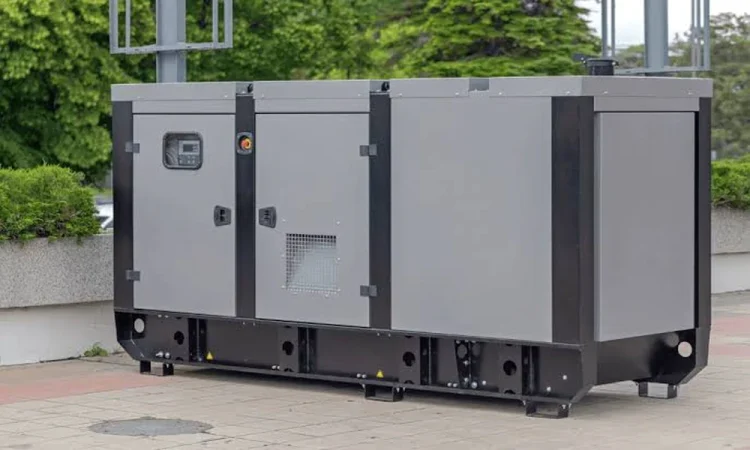
A 500 kVA generator sits at the top of the canopy range. Go bigger and you’re usually looking at a containerised unit instead. Worth knowing before you start comparing options for a larger site.
500kva generator rentals get used on commercial and industrial jobs that need serious power and can’t really afford a hiccup. Sometimes that’s an emergency running round the clock. Sometimes it’s a planned project stretching out over months. The unit doesn’t really care which one it is.
The specs behind the rating
Fuel tank holds close to 1400 litres. Burn rate at 75 percent load works out to about 68 litres an hour. Full load output lands at 505 kVA, a bit above the name on the label.
With fuel loaded up the whole thing weighs close to 8700 kilograms. Worth checking your crane and site access can actually handle that before it shows up.
Built for tough, demanding environments
- Welded steel construction that holds up under heavy daily use
- A bolted, galvanized canopy that resists corrosion over time
- Fire and gas detectors built into the unit itself
- Forklift pockets and a lifting beam for easy handling
Where this size actually gets used
Manufacturing plants keep production lines going with it. Mining sites run it out in the middle of nowhere, no grid in sight.
Offshore rigs use it too, it’s built for that kind of punishment. Even data centres keep one on standby for when the main power drops. Different industries, same job really. Keep things running.
Noise and fuel leakage get real attention
Built-in silencer, so it’s quieter than you’d expect for something this size. Handy near homes or offices. There’s also an alarm that flags fuel leaks the moment they start, before they turn into a genuinely messy problem.
This isn’t just a checkbox on a spec sheet either. You can see it in how the unit’s actually put together.
It can integrate into a larger power system
Rarely runs solo on a big industrial site, honestly. More often it’s part of something bigger, sitting next to other generators or feeding into a hybrid setup where load shifts automatically depending on demand.
That matters most somewhere power needs swing hour to hour, not just season to season.
Rent versus buy is worth a real look
Buy one this size and you’re staring down a big upfront cost, then maintenance, storage, eventual replacement down the line.
Renting turns all of that into one predictable expense instead. For a project with an actual end date, renting usually wins the math. For power you’ll need for years, it’s closer, worth running the real numbers rather than guessing.
A quick sizing check before you commit
Add up everything running at once. Don’t forget startup surges from big motors, they catch people out constantly.
Compare the total against 500 kVA and leave yourself some room, not the bare minimum. Push a generator right to its limit all day and it wears out faster, handles surges badly too.
A quick note on emergency versus planned use
Emergency call, speed wins. Planned project, you’ve got time to compare providers and actually negotiate a rate.
Either way this size shows up constantly on both kinds of jobs. The need underneath doesn’t change just because you had more warning.
A short checklist before requesting a quote
Handful of quick details and the whole quote process moves faster.
- Confirm total load including motor startup surges
- Ask whether offshore or marine-rated equipment is required
- Confirm site access for a unit this size and weight
A 500kva generator is built for sites that genuinely can’t go dark. Get the load math right, sort out site access early, and the rest of this tends to be pretty painless.