

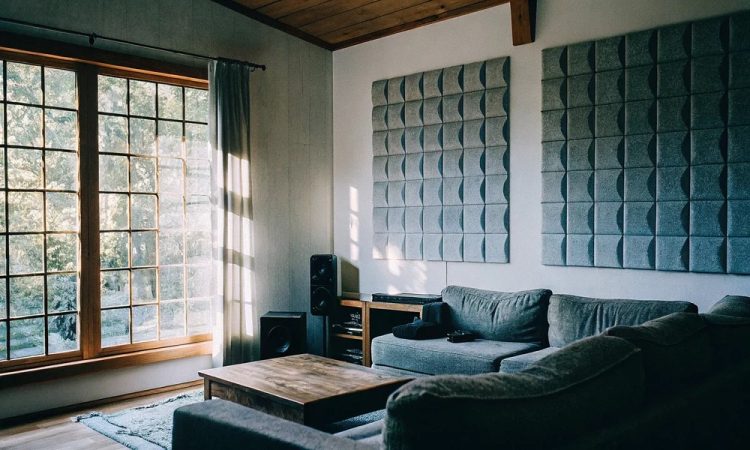
Most people assume improving acoustics is as simple as adding panels to a wall and calling it done.
But if you’ve ever been in two rooms that both had panels and one felt comfortable while the other still sounded off, you’ve already seen the difference in design.
The truth is, designs of acoustic panels aren’t just about filling empty wall space. It’s about shaping how sound behaves inside a room. Small decisions like where panels go, how thick they are, or how they’re spaced can completely change the result.
Once you start looking at it this way, it becomes less about decoration and more about control.
It Starts With How Sound Moves Around the Room
Before anything is installed, it helps to understand what’s actually happening with sound.
Sound doesn’t stay in one place. It:
- Travels outward in all directions
- Reflects off hard surfaces
- Overlaps with other sounds
- Builds up in certain areas
In a typical room, this creates “hot spots” where sound feels louder and more chaotic, and “dead spots” where it feels uneven or unclear.
A good acoustic panel layout works with this movement, not against it. Instead of randomly placing panels, it targets the areas where sound reflections are strongest.
Why Placement Often Matters More Than Quantity
It’s easy to think that covering more wall area will automatically fix the problem.
But more panels don’t always mean better results.
What really matters is where those panels are placed.
Strategic placement focuses on:
- First reflection points (where sound hits surfaces directly)
- Opposing walls that bounce sound back and forth
- Areas near seating, workstations, or conversation zones
When panels are placed correctly, they intercept sound early-before it has a chance to bounce multiple times.
That’s why a few well-positioned panels can outperform a room filled with panels placed without a clear plan.
Thickness Determines What Kind of Sound Gets Controlled
Not all sound behaves the same way.
Higher-frequency sounds (like speech) are easier to absorb, while lower frequencies (like bass or heavy vibrations) are harder to control.
This is where thickness comes in.
- Thinner panels mainly absorb higher frequencies
- Thicker panels handle a wider range, including lower frequencies
So if a room still feels “boomy” or heavy even after panels are installed, it’s often because the panels aren’t thick enough for the type of sound being produced.
A well-thought-out acoustic panel design takes this into account from the start, matching panel depth to the actual acoustic problem.
Materials Change How Panels Perform
The material inside the panel plays a huge role in how effective it is.
Different materials absorb sound differently, which affects:
- How much noise is reduced
- Which frequencies are controlled
- How durable is the panel over time
Common materials include:
- Fabric-wrapped cores for balanced absorption
- Foam for lighter, surface-level control
- Dense fibre materials for stronger performance
Choosing the right material isn’t just about sound-it’s also about maintenance, lifespan, and how the panel fits into the space.
Spacing Isn’t Just for Looks-It Affects Sound
A lot of people assume panels need to fully cover a wall to work.
But in many cases, spacing them out actually improves performance.
Strategic spacing:
- Breaks up sound reflections more effectively
- Prevents sound from bouncing in predictable patterns
- Maintains a natural balance in the room
Too many panels placed too closely can “over-deaden” a space, making it feel flat or unnatural.
Too few panels, on the other hand, leave too much reflection. The goal is balance-not maximum coverage.
Walls Aren’t the Only Surfaces That Matter
Most people focus on walls, but ceilings play just as important a role.
Sound doesn’t just travel sideways-it also moves upward and reflects back down.
In many spaces, especially those with higher ceilings:
- A large portion of sound reflection comes from above
- Echo builds up vertically as well as horizontally
Adding ceiling treatment alongside wall panels helps:
- Distribute sound more evenly
- Reduce overall echo
- Create a more balanced acoustic environment
A complete acoustic panel layout usually considers both surfaces, not just one.
Matching the Design to How the Room Is Used
Every space has different acoustic needs.
A design that works well in one environment might not work in another.
For example:
- Meeting rooms need clear speech and minimal echo
- Living rooms need balanced, comfortable sound
- Restaurants need noise reduction without killing the atmosphere
- Studios may require more precise sound control
That’s why effective acoustic design always starts with a simple question: how will this space actually be used?
The answer shapes everything else.
Finding the Balance Between Function and Aesthetics
Acoustic panels used to look purely functional-but that’s no longer the case.
Today, they can be:
- Subtle and blended into the background
- Designed to match colours and textures
- Arranged as part of the visual layout of a room
This means acoustic treatment doesn’t have to feel like an add-on.
In many cases, it becomes part of the design itself-improving both how the space looks and how it performs.
It’s About Control, Not Silence
One of the biggest misconceptions is expecting acoustic panels to make a room completely quiet.
That’s not really the goal.
A good acoustic panel design focuses on:
- Reducing unwanted reflections
- Improving clarity and balance
- Making the space more comfortable to be in
The result is not silence-it’s control. You still hear everything, but it feels organised instead of chaotic.
Final Thoughts
Acoustic panels aren’t just about adding something to a wall-they’re about shaping the experience of a space.
- How sound moves
- Where reflections occur
- What type of noise needs to be controlled
- How the space is actually used
And when all of that comes together, the difference is immediate.
The room doesn’t just sound better-it feels more comfortable, more natural, and much easier to spend time in, even if you can’t immediately explain why.